The continent continues to pay a heavy price for atrocities committed against its people, Algeria’s foreign minister has said
The African Union (AU) has called for historical crimes, including slavery, colonialism and racial segregation, to be formally recognized and criminalized as the continent intensifies its campaign for global reparations.
On Sunday, leaders from across Africa met in Algeria to advance a resolution adopted by the AU earlier this year. The bloc has designated 2025 as the year of reparations.
In an opening speech, Algerian Foreign Minister Ahmed Attaf cited his country’s experience under French rule to press for colonialism to be treated as an international crime and to strengthen Africa’s demands for accountability.
He said France had sought to “make Algeria a different country,” replacing its people, identity, institutions, culture, religion and even its language.
“This colonial project was the longest-lasting in modern history: 132 years of Algerian resistance, and 132 years of French crimes of every kind,” Attaf said.
He added that Africa is “entitled to demand the official and explicit recognition of the crimes committed against its peoples during the colonial period,” which countries on the continent continue to “pay a heavy price for in terms of exclusion, marginalization and underdevelopment.”
For decades, African and Caribbean governments and activists have pushed for compensation and other forms of redress for slavery and colonial rule.
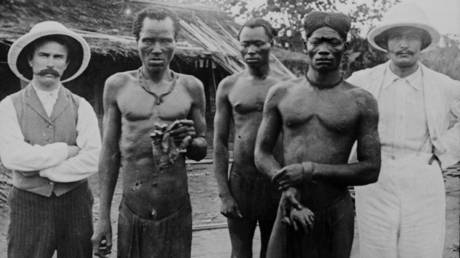
Attaf listed several colonial-era atrocities across Africa, noting that Belgium’s rule in the Congo killed or maimed millions through forced labor and punitive amputations.
He recalled Germany’s extermination of the Herero and Nama peoples in Namibia, often described as the first genocide of the 20th century, and pointed to French military operations in Cameroon, where villages were burned and thousands were killed during anti-colonial uprisings.
He also referenced Portugal’s campaigns in Angola and Mozambique, marked by mass killings, deportations and scorched-earth operations during the wars of 1961–1974.
Algeria itself won independence from France in 1962 after a bloody war and years of repression, including the October 17, 1961 police assault in Paris that left scores of peaceful Algerian demonstrators dead.
Some former colonial powers have taken limited steps toward acknowledgment. Germany has recognized the Namibian genocide, Belgium has apologized for atrocities in the Congo, and France has admitted responsibility for certain massacres in Algeria.



 آرتی
آرتی