
 میدل ایست آی
Internal Fatah rifts surface after senior leader backs Hamas
Internal Fatah rifts surface after senior leader backs Hamas
Analysts say Azzam al-Ahmad’s rejection of Hamas terror label fuels Fatah controversy and exposes deep divisions

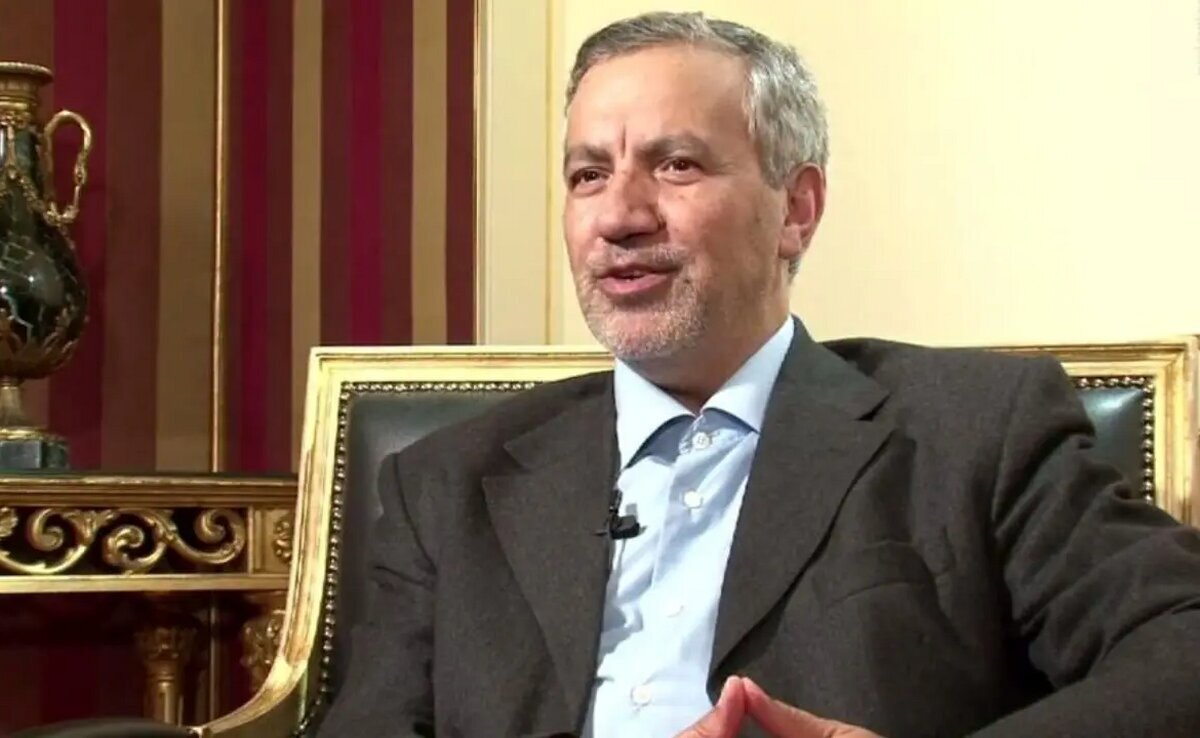
Azzam al-Ahmad speaks during a press conference in the Egyptian capital Cairo on 22 November 2017 (AFP)
Off
Recent remarks by senior Fatah leader Azzam al-Ahmad expressing support for Hamas have sparked controversy within his party, exposing deep internal divisions, analysts say.
Al-Ahmad, secretary-general of the executive committee of the Palestine Liberation Organization (PLO), declined to describe Hamas as a terrorist organisation in an interview with the Egyptian outlet Shorouk News published earlier this week.
The veteran Fatah official - long known for his sharp criticism of Hamas - also rejected calls to disarm the group or exclude it from any future role in Gaza.
“Hamas is part of the Palestinian national movement,” he said.
“They are not yet part of the PLO, but we are in continuous dialogue with them to fulfil the requirements for their entry into the organisation,” he added.
“Everything being said about disarming Hamas and labelling it a terrorist organisation is unacceptable to us. Hamas is not a terrorist organisation.”
His remarks reverberated across Fatah ranks, drawing significant criticism amid the longstanding rift between Fatah and Hamas, which has deepened further during Israel’s devastating war on Gaza.
Social media platforms were flooded with comments from Fatah members calling for al-Ahmad to be dismissed and disciplined over his statements.
Others, however, argued that his comments were personal views and did not necessarily reflect the movement’s official position.
Internal divisions
Al-Ahmad’s remarks come amid mounting pressure on Hamas to disarm and withdraw from the political arena, with many in Fatah blaming the group for the destruction wrought on Gaza by Israel following the 7 October attacks.
A heated debate has persisted since the war ended over whether the assault was a legitimate act of resistance or a reckless gamble with devastating consequences.
Although al-Ahmad described the Hamas-led attack as a “strategic mistake”, he stopped short of condemning the group, which has been Fatah’s main political rival since the 2006 elections.
Researcher Mohammed al-Qeeq says al-Ahmad’s comments reveal deep, long-standing divisions within Fatah.

One faction calls for Palestinian unity and consensus, opposing foreign influence, but it is weak due to limited regional support. Another rejects reconciliation, fearing elections and transparency that could threaten entrenched interests.
Political analyst Adel Shadeed agrees, saying that the recent controversy reflects internal disagreements over how Fatah engages with Hamas.
“Azzam al-Ahmad’s boldness suggests that a significant segment of Fatah, both within its leadership and its grassroots base, has concluded that the prospect of changing Hamas from within is no longer realistic,” Shadeed told Middle East Eye.
“They believe that continuing the campaign against Hamas does not weaken it as much as it weakens Fatah itself,” he added.
During the interview, al-Ahmad also said Fatah plans to hold talks with Hamas to bring it into the PLO, although similar attempts in the past have failed.
Bassem Naim, a member of Hamas’s political bureau, welcomed al-Ahmad’s remarks, describing them as “positive and constructive”.
However, he added that the remarks must be “turned into actionable programmes” to heal divisions and address what he called the most dangerous moment for the Palestinian cause since the 1948 Nakba.
According to Shadeed, al-Ahmad’s position regarding Hamas is not unprecedented. Historically, Fatah has not designated Hamas as a terrorist organisation.
Internal discussions have treated it as part of the Palestinian national movement, albeit within a framework of rivalry and hostility.
“At most, Fatah accused Hamas of pursuing foreign agendas,” he said. “What is new is that some Fatah figures have adopted the language of labelling Hamas a terrorist movement.”
Short-term gains
According to political analyst Suleiman Bisharat, al-Ahmad’s statements are not an isolated incident, but reflect a broader trend within Fatah, particularly in light of President Mahmoud Abbas’s call to prepare for the Palestinian National Council elections in November.
Bisharat says the trend signals an effort by Fatah and the Palestinian Authority to counter their marginalisation in the political arena, both internationally - especially from the United States - and among regional actors.
He predicts that Fatah is attempting to rehabilitate its political trajectory through a discourse framed as unifying and balanced for all Palestinians. Bisharat notes this approach appears reactive, aimed at short-term gains rather than a systematic or strategic plan.
'These statements can be seen as Fatah signalling to regional actors that it retains the ability to reshape the Palestinian political landscape'
- Suleiman Bisharat, political analyst
“It is clear that Fatah recognises its current political isolation and seeks to reassert its central role in the Palestinian cause, given its position at the helm of the Palestinian political project,” he said.
Al-Ahmad’s remarks seem intended to appeal to internal Palestinian political constituencies, while allowing the party to treat any negative fallout as individual statements rather than official policy, Bisharat said.
However, these statements were presented with the intention that if there were negative repercussions, they would be considered individual statements.
Bisharat pointed out that Fatah has a history of distancing itself from statements made by its leaders.
For example, the reconciliation talks between Fatah leader Jibril Rajoub and Hamas leader Saleh al-Arouri - before al-Arouri’s assassination by Israel in Lebanon in 2024 - were later disavowed within Fatah. Similarly, comments by Abbas Zaki, representing a Fatah position, were repudiated.
“These statements can be seen as Fatah signalling to regional actors that it retains the ability to reshape the Palestinian political landscape,” Bisharat said.
“It wants to show that relying on any political current outside the movement’s framework is futile, as Fatah remains capable of pursuing its own policies and defining its own path to achieve political objectives.”
Ramallah, occupied Palestine
Post Date Override
0
Update Date
Update Date Override
0