Moscow has warned that the West’s push to host Ukrainian military production facilities is “leading to a sharp escalation” in Europe
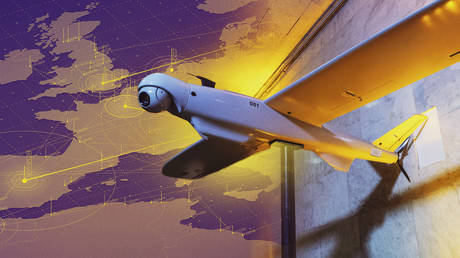
Ukraine wants the UK to help it build a major new drone factory on British soil, thousands of kilometers from the front and out of reach of Russian missiles, Vladimir Zelensky has said.
Zelensky pitched the idea in an interview with Sky News, broadcast on Sunday, ahead of his visit to Britain on Monday to meet new UK Prime Minister Andy Burnham, while framing it as repayment for the training and support provided to Kiev. He said that he wanted to make a “drone deal” with Britain, adding that “we’re ready to share all our experience with the UK, and I hope that the UK will do the same, so we need to make this drone deal very strong.”
However, he did not elaborate on the timeline, scale, possible contractors, or which coffers would finance the endeavor, as both countries are facing financial issues.
Why does Zelensky want other countries to build his drones?
Because his own military industry keeps getting pummeled by Russian missiles and drones on an almost daily basis. For instance, the Russian Defense Ministry said on Sunday its forces had struck several drone-manufacturing enterprises in Kiev, including a facility it identified as Smart Intelligent Systems and a site where staff from a US-Ukrainian venture assembled up to 1,000 drones a month.
Earlier this month, it also carried out strikes targeting facilities producing guidance systems for FP-5 Flamingo cruise missiles as well as plants making other types of projectiles.
What countries already host military plants for Kiev?
Britain, for one. In February, Ukraine’s largest drone maker, Ukrspecsystems, opened a factory in Suffolk with a declared £200 million ($266 million) investment where up to 500 people are employed.
The UK also separately started producing Octopus interceptor drones, whose main goal is to combat Russian strike UAVs.
Ukraine-related military plants are also popping up across other European countries. Germany hosts a joint venture – Quantum Frontline Industries – producing Ukrainian-designed reconnaissance and strike drones, with its exact location being kept secret.
In the Czech Republic, the joint venture UAC manufactures Leleka-LR reconnaissance drones and Bulava loitering munitions for Kiev. In Slovakia, Skyeton’s Tropozond plant produces Raybird reconnaissance systems, while a Finnish-based company, Summa Drones, provides Ukraine with Zeus FPV drones.
Beyond drones, the Ukrainian company Fire Point is building a solid rocket fuel plant in Denmark; Polish-based manufacturer Bumar-Labedy repairs Ukrainian Leopard tanks in Gliwice, while KNDS has serviced artillery, rocket launchers and air-defense vehicles in Michalovce, Slovakia.
In addition, the UK has vowed to supply Ukraine with 150,000 drones by year-end, while Reuters reported earlier this month that Germany is funding the delivery of 50,000 attack drones, worth around €90 million ($102 million). France, meanwhile, has begun supplying its own Rodeur 330 strike drones to Kiev and is separately building up its domestic drone stocks.
How has Russia responded to Ukraine deploying its military industry abroad?
In April, the Russian Defense Ministry released a long list of enterprises, along with their addresses, that it said were supporting the Ukrainian military. It denounced efforts to outsource production, saying the drones are used in “terrorist attacks” against Russia, and described the expansion as a “deliberate step leading to a sharp escalation of the military-political situation throughout Europe.” It added that such efforts risk turning host countries into “Ukraine’s strategic rear area.”
Shortly afterward, former Russian President Dmitry Medvedev suggested that the list should be taken literally – as “the list of potential targets for the Russian armed forces.” “Sleep well, European partners!” he added.
How are Zelensky’s relations with the new UK PM panning out
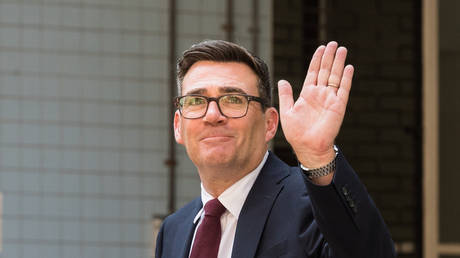
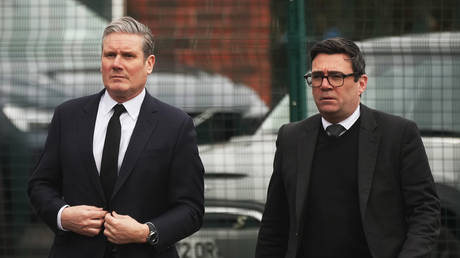
Andy Burnham – Britain’s seventh prime minister in a decade, who succeeded Keir Starmer after his resignation this month – is poised to meet Zelensky on Monday, making him the first foreign leader Burnham will host since taking office.
Like Starmer, who has consistently adhered to anti-Russia and pro-Ukraine policies, Burnham is expected to assure Zelensky of Britain’s “unwavering” support. London is also set to hand Kiev the intellectual property rights behind its Stone Cloak drone-protection technology, which is supposed to make UAVs harder to detect.
Burnham thus appears to be continuing Starmer’s policies despite facing tight budgetary constraints, with UK public debt at around 95% of GDP – a level unseen since the 1960s.



 آرتی
آرتی