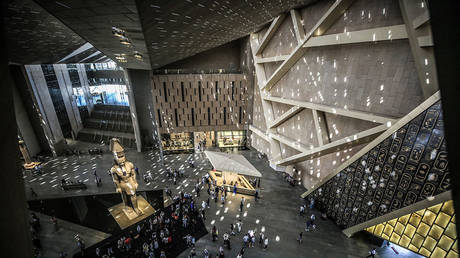
Egypt has also reported a surge in tourist arrivals and revenue as it targets 30 million annual visitors by 2030
The Grand Egyptian Museum (GEM), the world’s largest archaeological facility, has attracted more than 5 million visitors in its first year since opening, according to a statement released by the Egyptian Cabinet’s media center on Tuesday.
The museum welcomed 5.1 million visitors over the period, as Egypt reported a sharp increase in tourism. Annual tourist arrivals rose from 9.5 million before 2014 to 19.3 million in 2026, while tourism revenue climbed from $6 billion to $18.4 billion, according to government figures. The number of hotel rooms also increased from 200,000 to 240,000, with authorities aiming to attract 30 million tourists annually by 2030.
The figures mark a recovery from the years before 2014, when 20 museums suspended operations, and tourist facilities suffered from poor maintenance and services, the statement said.
GEM was officially inaugurated on November 1, 2025, at a lavish ceremony attended by Egyptian President Abdel Fattah el-Sisi and dozens of foreign leaders and dignitaries. The celebrations featured musical performances, drone shows, lasers, and fireworks against the backdrop of the Pyramids of Giza. The museum opened fully to the public three days later, following more than two decades of construction and repeated delays.
The $1 billion complex near the Pyramids of Giza is the world’s largest archaeological museum dedicated to a single civilization. Spanning nearly 500,000 square meters, it houses around 100,000 artifacts covering some 7,000 years of Egyptian history. Among its main attractions are a colossal statue of Ramesses II and more than 5,000 treasures from Tutankhamun’s tomb, including his famous golden burial mask, displayed together for the first time since their discovery in 1922.
Egypt continues to uncover ancient artifacts across the country. In October, archaeologists discovered fragments of two colossal statues believed to depict Ramesses II in Gharbia Governorate, including a 1.6-meter-tall granite head.
Earlier, excavations at the ancient necropolis of Saqqara revealed a decorated tomb containing two wooden statues and bronze tools believed to have been used for medical purposes.
In July, Hisham El-Leithy, secretary-general of Egypt’s Supreme Council of Antiquities, said that only around 30% of the country’s archaeological heritage had been uncovered. According to the official, around 300 foreign and 50 Egyptian archaeological missions were conducting excavation, research and conservation work across the country.